NOCO Tire Inflator Review: Worth It? (November 2026)
The NOCO AIR10 is worth buying for cars, SUVs and light trucks with tires up to 31 inches, because it moves 36 liters per minute and runs a 25-minute duty cycle. Pick a cordless pump if you want no 12V cord, or a cheaper 12V model for occasional top-offs.
On this page (9 sections)
- The NOCO AIR10 at a glance
- Who should buy the NOCO AIR10
- The specs that matter in daily use
- Setting up and using the AIR10
- Care and storage between uses
- The trade-offs to know before you buy
- Alternatives worth comparing
- Verdict: is the NOCO AIR10 worth it?
- For a broader look at the category, the ETENWOLF Vortex S6 review covers another cordless option. Whichever pump you choose, check your tire size and target pressure first, because that's the spec that decides whether a pump can do the job.
The NOCO AIR10 is a fast corded 12V inflator for cars, SUVs and light trucks, and it earns a place in the trunk if your tires are 31 inches or smaller. Its 36 liters per minute airflow and 25-minute duty cycle make it quicker and longer-running than most pumps that plug into a cigarette lighter.
The trade-offs are a 60 PSI ceiling and a dependence on your car's 12V socket. If you want cordless freedom or higher pressure, the alternatives below do those jobs better.
This NOCO tire inflator review walks through what the AIR10 does well, where it stops, and which pump fits which driver.
The NOCO AIR10 at a glance
The AIR10 is a handheld 12V compressor built around speed. NOCO pairs a 138-watt motor with a 36 L/min pump, and the result is a 0 to 40 PSI fill in 3.8 minutes on a 205-65R16 tire.
A digital display handles settings from 15 to 60 PSI in PSI, kPa or bar.
NOCO AIR10: Best for 12V tires up to 31 inches

- 36 L/min airflow
- 0 to 40 PSI in 3.8 minutes
- 25-minute duty cycle
- Dwell smart pressure control
- 60 PSI maximum
A corded 12V inflator built around speed and run time. It fills a 205-65R16 from 0 to 40 PSI in 3.8 minutes and keeps going for 25 minutes without a break.
Pros
- 36 L/min airflow is quick for a 12V pump
- 25-minute duty cycle covers several tires in one session
- Dwell technology pauses and resumes near the target pressure
- Digital settings from 15 to 60 PSI plus PSI, kPa and bar
Cons
- 60 PSI ceiling rules out many heavy-duty trailer tires
- Needs a 12V socket, so the 10-foot cord limits where you can stand
- A 3-foot hose means moving the unit close to each wheel
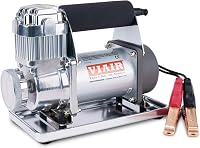
It's aluminum-bodied and measures 4.41 by 8.54 by 10.83 inches, so it takes real trunk space rather than slipping into a glovebox. That size buys the bigger motor and the longer run time, and it's the main thing to weigh against the smaller 12V pumps.
The body is rated at 10 amps and 138 watts, which is a meaningful draw for a handheld pump. The maximum pressure is 60 PSI, or 4.1 bar and 413 kPa, and the airflow works out to 1.27 cubic feet per minute.
Those numbers sit in the spec table, but they're the ones that decide whether a pump can fill a tire or just top one off.
Who should buy the NOCO AIR10
Buy the AIR10 if your daily driver, SUV or crossover runs tires up to 31 inches and you want one pump that handles a slow leak and a full four-tire pressure check without stopping. The 25-minute duty cycle is the feature that matters here: NOCO says it can fill five tires from 0 to 40 PSI in one session.
Skip it if you drive a heavy-duty truck or a trailer with 60-plus PSI tires. The AIR10 tops out at 60 PSI, so a tire that needs 65 or 80 PSI won't reach its target.
Skip it too if your 12V socket is hard to reach or you often park far from an outlet.
It also suits the driver who wants set-and-forget pressure. Dwell technology pauses and resumes the pump near the target and shuts off automatically, so you can walk away while a tire fills.
The rated tire sizes line up with common vehicle pressures: cars at 30 to 40 PSI, SUVs at 30 to 45 PSI, motorcycles at 24 to 40 PSI, lawnmowers at 10 to 30 PSI and light-duty trucks at 30 to 50 PSI. The 60 PSI ceiling still leaves room for a trailer tire at the top of its range, but not a heavy one that wants more.
The specs that matter in daily use
Airflow and duty cycle decide how the AIR10 feels in real use. At 36 L/min it's fast enough that topping off four tires is a five-minute job rather than a 20-minute one.
The 25-minute continuous rating means you don't have to wait between wheels.
Pressure range matters just as much. The 15 to 60 PSI digital setting covers car tires at 30 to 40 PSI and SUVs at 30 to 45 PSI with room to spare.
Below 15 PSI, manual mode takes over for bike tires, sports balls and inflatable toys.
The 3-foot braided hose and 10-foot power cord set your working radius. You'll park near the 12V socket and move the unit wheel to wheel, which is normal for a corded pump.
The 10-amp draw means you should run the engine while inflating so you don't drain the battery.
NOCO also fits a 60-lumen LED flashlight with SOS mode. It's a small extra that helps when you're kneeling at a wheel after dark.
If you want the mechanics behind these numbers, how a tire inflator works explains airflow, pressure sensors and shut-off.
Setting up and using the AIR10
Setup takes one minute. Screw the hose onto the tire valve, plug the 10-foot cord into the 12V socket, start the engine, and set your target pressure on the display.
The pump does the rest.
Press the buttons to choose PSI, kPa or bar, then set the target between 15 and 60 PSI. Hit start and let dwell technology handle the pause-and-resume cycle near the set pressure.
The pump shuts off when the tire reaches the number, so you don't have to watch the gauge.
For a flat tire, the full fill takes about 3.8 minutes from zero. For a routine top-off, expect under 41 seconds per tire.
Keep the engine running during a four-tire session, because the 10-amp draw is enough to matter on a weak battery.
Store the adapters for Presta valves, needles and inflatable toys in the microfiber bag. The Presta adapter matters for road and mountain bikes; the needle covers basketballs and footballs.
Check your tire's sidewall for the size and recommended pressure before you start. NOCO rates the AIR10 for tires 31 inches or smaller, so a quick look at the size code tells you whether the pump is right for the vehicle.
Using manual mode and the pressure units
Manual mode is the part of the pump the digital setting can't reach. The display stops at 15 PSI, but ATV and UTV tires often run at 5 to 20 PSI, and a basketball or bike tire sits well below 15 PSI.
Switch to manual, watch the gauge and stop when the tire or ball feels right. The needle and Presta adapters exist for exactly those jobs.
The three pressure units matter for imported vehicles and manuals that list kPa or bar. Since the AIR10 reads all three, you don't have to convert a sidewall number in your head before you start.
Care and storage between uses
The AIR10 needs very little care. Wipe the aluminum body, keep the hose coiled without sharp bends, and store it in the bag so the adapters don't get lost.
The braided hose is the part to watch, since a kinked hose restricts airflow and slows fills.
Check the 12V plug and cord for wear now and then. A loose plug can heat up during a long fill, so seat it firmly and keep the cord away from hot engine parts.
Don't leave the pump running unattended for long stretches, even with auto shut-off.
The 60-lumen flashlight runs on the same power. Switch it off after use so it doesn't drain the car battery while the pump sits in the trunk.
NOCO covers the AIR10 with a 1-year limited warranty.
Store it out of direct sun and away from damp spots. Heat and moisture are the usual reasons a 12V pump fails early, and a dry bag in the trunk avoids both.
If you keep it in the car year-round, bring it inside during extreme cold snaps so the display and sensor stay reliable.
The trade-offs to know before you buy
The 60 PSI ceiling is the biggest limit. Many light-truck and trailer tires run at or above that number, so the AIR10 isn't the pump for a heavy tow rig.
The alternatives below reach 100 and 150 PSI and cover those tires.
The 12V cord is the second trade-off. You can't inflate away from the car, and the 10-foot length means the pump sits close to the socket.
A cordless model frees you from the socket but adds a battery to keep charged.
Its size and 2,440-gram weight also make it a trunk tool rather than a glovebox one. The aluminum body feels solid, but it takes up more room than the light plastic pumps.
The 3-foot hose is short enough that you'll move the unit to each wheel.
None of these are deal-breakers for the intended buyer. They're the reasons the AIR10 suits cars and SUVs rather than every vehicle on the road.
Alternatives worth comparing
Two other pumps cover the cases where the AIR10 falls short. One drops the cord entirely, and the other keeps the 12V plug but raises the pressure ceiling and lowers the price.
If you're cross-shopping brands more broadly, the ETENWOLF vs DeWalt tire inflator comparison covers another pair in this category.
AstroAI L7 Tire Inflator Portable Air Compressor
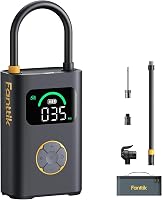
The L7 is the cordless pick. A 4000mAh battery refills up to eight 195/65R15 tires from 30 to 36 PSI per charge, and the 150 PSI ceiling covers more tire types than the AIR10.
It also works as a USB-C power bank for your phone. It weighs under 1 pound and has 4+N smart modes plus auto shut-off.
It's the better choice if you park away from an outlet or don't want a cord across the car. The trade-off is a battery you need to keep charged and a 10-minute rest after 15 minutes of use.
NOCO's 25-minute continuous run beats that for long sessions.
AstroAI AIRUN H Tire Inflator Portable Air
The AIRUN H is the budget 12V pick. It uses a 120W motor for 35 L/min airflow, close to the AIR10's 36 L/min, and its 9.84-foot cord reaches all four wheels without moving the car.
The 100 PSI ceiling is higher than NOCO's 60 PSI, and it weighs only 2.2 pounds.
It suits the driver who wants a glovebox pump for occasional top-offs and doesn't need the AIR10's longer run time. The 15-minute auto shut-off and 10-minute cool-down mean it's a top-off tool, not a four-tire session pump.
AstroAI backs it with a 2-year limited warranty. For a closer look at another NOCO model, the NOCO AIR20 review covers the larger sibling.
Verdict: is the NOCO AIR10 worth it?
Buy the NOCO AIR10 if you want a fast, long-running 12V pump for car and SUV tires up to 31 inches. The 36 L/min airflow and 25-minute duty cycle make it the quickest corded option here for a full four-tire check, and dwell technology takes the guesswork out of the target pressure.
Skip it if you drive a heavy-duty truck or trailer that needs more than 60 PSI. Pick the cordless AstroAI L7 instead when you want no 12V cord and a 150 PSI ceiling.
Pick the AstroAI AIRUN H when you want a lighter, cheaper 12V pump for occasional top-offs and a longer cord.
For a broader look at the category, the ETENWOLF Vortex S6 review covers another cordless option. Whichever pump you choose, check your tire size and target pressure first, because that's the spec that decides whether a pump can do the job.
Frequently asked questions
Is the NOCO AIR10 strong enough for SUV tires?
Yes for most SUVs. NOCO rates it for tires up to 31 inches and a 60 PSI maximum, which covers the 30 to 45 PSI that SUVs typically run.
Check your tire's sidewall size and pressure first, because a large light-truck tire may need more.
How long does the NOCO AIR10 take to inflate a flat tire?
NOCO says a 205-65R16 tire goes from 0 to 40 PSI in 3.8 minutes. A top-off from 35 to 40 PSI takes under 41 seconds.
Times vary with tire size and starting pressure, and the 25-minute duty cycle covers about five full fills.
Can the NOCO AIR10 inflate bike tires and sports balls?
Yes. It includes a Presta valve adapter and a needle, and a manual mode for pressures under 15 PSI.
Use manual mode for basketballs, bike tires and inflatable toys, since the digital setting only starts at 15 PSI.
Does the NOCO AIR10 plug into a wall outlet?
No. It runs from a 12V cigarette lighter socket through a 10-foot power cord.
You inflate with the car running or the ignition in accessory mode, so plan on doing tire work wherever the vehicle is parked.