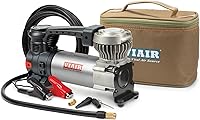
12V vs 20V Tire Inflators: Which Is Better? (November 2026)
A 20V cordless inflator is the better choice for most drivers, because it inflates without being tethered to the car. A 12V inflator still wins for buyers who want the simplest, cheapest emergency pump that never needs charging.
On this page (9 sections)
- 12V vs 20V tire inflators: what actually differs?
- How we compared these tire inflators
- Cordless freedom vs a guaranteed power supply
- Inflation speed and pressure limits
- Battery life, charging and the dead-battery risk
- Build, size and where the pump lives in your car
- Who should buy a 12V pump?
- Who should buy a 20V pump?
- 12V vs 20V tire inflator: the verdict
A 20V cordless inflator is the better choice for most drivers, because it inflates without being tethered to the car. A 12V inflator still wins for buyers who want the simplest emergency pump that never needs charging.
The 12v vs 20v tire inflator question comes down to how you'll use the pump: a quick top-up at home, a roadside rescue or a slow leak on a remote road. The OlarHike takes the overall win here because it runs on its own battery and from a 12V socket.
That dual setup is the reason it scores 9.7. It gives you the cordless freedom of a 20V pump without the dead-battery risk that comes with leaving the house on a partial charge.

 Best for fast 12V inflation
ROCGORLD R8 Tire Inflator Portable Air Compressor
12V vs 20V tire inflators: what actually differs?
The main difference is where the electricity comes from, not how much pressure the pump can make. A 12V inflator draws from the car's cigarette socket or battery clamps.
A 20V inflator runs on a removable lithium-ion pack, and many also include a 12V cord as backup.
That single design choice shapes everything else: whether you can inflate with the engine off, how long the pump lasts between charges and what you carry in the trunk.
Pressure ceilings overlap across both types. The corded ROCGORLD reaches 150 psi and the MaxMore 20V pump reaches 160 psi.
The OlarHike, a battery pump, also lists 160 psi. So don't buy on voltage alone.
What the 12V and 20V labels really mean
A 12V pump is matched to the car's electrical system. It runs as long as the socket has power, but the cord limits where you can stand and the engine usually needs to be running.
A 20V pump carries its own energy. The pack adds weight and cost, and it needs charging before a trip.
In exchange, you can walk it to a bike, a trailer or a car parked away from an outlet.
Many 20V models hedge by including a 12V cord. That's the practical middle ground, and it's why the OlarHike tops this comparison.
When the voltage number is misleading
Voltage tells you about the battery platform, not the pump's output. A 12V pump with a strong motor can out-inflate a weak 20V one.
Compare airflow in liters per minute and maximum pressure instead. The ROCGORLD lists 40 L/min on 12V, higher than the AVID POWER's 28 L/min on 20V.
How we compared these tire inflators
We checked the specs and features of each pump and matched them to the jobs drivers actually do. Our score weighs specs, features and how well each product fits what you're shopping for.
We did not physically test these products. We looked at power source, airflow, pressure ceiling, auto shut-off, cord and hose length, weight and what ships in the box.
We also weighed how each pump handles the two failure modes that matter on the road: a flat battery and a socket that won't reach. Those two problems decide most 12V vs 20V purchases.
The products here range from a pure corded 12V pump to a bare-tool 20V inflator that reuses DeWalt batteries. That spread shows the real choice better than voltage labels alone.
If you want the full background on how these machines work, our guide on how a tire inflator works explains the motor, pump and pressure sensor.
Cordless freedom vs a guaranteed power supply
A 20V pump frees you from the car's socket; a 12V pump frees you from charging. That trade-off is the heart of the 12v vs 20v tire inflator decision.
With a 20V pump, you grab the tool, clip the hose to the valve and press start. Nothing is plugged into the car, so you can inflate a bike in the garage or a trailer at the storage lot.
The cost is battery management. A pack left in a cold trunk for months loses charge, and a flat tire plus a flat battery leaves you stuck.
A 12V pump avoids that failure mode. The car supplies the power, and as long as the engine runs, inflation continues.
The trade-off is the cord: the ROCGORLD's 10 ft power cord reaches around most cars, but not to a separate trailer.
The dual-power option most drivers should consider
The OlarHike sits in both camps. Its 6000mAh battery handles cordless top-ups, and the included 12V cord takes over when the pack runs low.
That removes the main worry of a 20V pump without giving up the convenience. For a single pump that covers home, road and emergency use, this is the setup to beat.
Inflation speed and pressure limits
Airflow and pressure ceiling decide which pump suits your tires, and the two don't always move together. Check both before you buy, because a fast pump with a low ceiling can't fill a truck tire.
The ROCGORLD leads on airflow at 40 L/min. ROCGORLD says it fills a 215/50 R17 tire from 26 to 35 psi in under a minute, and a Tesla-size 235/40 R19 tire in about 1.5 minutes.
The OlarHike lists 24 L/min and claims 55 seconds for a 195/65 R15 tire going from 30 to 35 psi. The AVID POWER lists 28 L/min and fills a 195/60 R14 tire to 38 psi in 3.5 minutes from flat.
Pressure ceilings to check against your vehicle
The AVID POWER stops at 50 psi. AVID POWER says it suits tires up to 245mm wide or 50 psi, and not commercial vehicles, trucks or large caravans.
The OlarHike lists 160 psi but notes the unit inflates cars and light pickups only up to 51 psi. It's not for heavy-duty pickups or RVs.
The ROCGORLD reaches 150 psi and the MaxMore 160 psi, so both handle higher-pressure truck tires. Match the ceiling to your vehicle before choosing a pump.
Real-world speed depends on the starting pressure
Going from 30 to 35 psi is a top-up. Going from 0 to 35 psi takes several times longer.
The OlarHike's maker figures show the gap: 55 seconds for a 5 psi top-up, about 6.5 minutes for the same tire from flat. Plan for the flat-tire case when you judge speed.
Battery life, charging and the dead-battery risk
Battery life is the 20V pump's weak point and its main advantage. A charged pack means cordless inflation; a drained pack means waiting or finding a socket.
The AVID POWER includes a 20V lithium-ion battery that AVID POWER says fills four 195/60 R14 tires from flat to 36 psi on one charge. The pack is removable, so a spare is an option.
The OlarHike's 6000mAh battery is built in. OlarHike says it tops up 18 car tires or 11 SUV tires by 5 psi on a charge, and warns those figures are for topping up near 30 psi, not from flat.
Charging differs too. The OlarHike charges over USB-C but ships without a wall charger; OlarHike says to use a 5V 2A or 5V 3A adapter.
The AVID POWER includes its own charger.
How to avoid a dead battery on the road
Top up the pack before every long trip and keep the 12V cord in the car. The OlarHike and AVID POWER both ship with one.
Store the pack where it won't sit at freezing temperatures for months. A pack kept in a hot or cold trunk loses charge faster than one kept indoors.
A corded 12V pump sidesteps the problem entirely. The ROCGORLD has no battery to charge, so it's ready whenever the car starts.
Build, size and where the pump lives in your car
Trunk space and weight decide whether a pump actually travels with you. A pump left in the garage doesn't help at the roadside.
The OlarHike is the smallest and lightest here at 1.2 lb and 6.5 x 2.76 x 2.17 inches. It includes a storage bag, so it drops into a trunk corner or a door pocket.
The ROCGORLD weighs 2.2 lb and measures 6.49 x 2.79 x 4.92 inches. It ships with a carrying bag and folds into a compact shape.
The AVID POWER is bigger at 7.09 x 2.95 x 10.24 inches, with an upright handle. The MaxMore is larger still at 11.02 x 5.9 x 7.87 inches, because it includes a second motor for high-volume inflation and deflation.
Features that make a roadside job easier
All four pumps include auto shut-off. Set the target pressure and the pump stops on its own, so you don't have to watch the gauge in the rain.
Lighting helps at night. The OlarHike has a built-in LED flashlight, the ROCGORLD offers three light modes including an SOS signal, and the MaxMore includes an LED light.
The AVID POWER adds a self-locking safety switch below the trigger, which prevents accidental starts. The ROCGORLD adds a memory function so the next inflation starts from your last setting.
Who should buy a 12V pump?
Buy a 12V pump if you want a simple, corded tool that's always ready when the engine runs. It suits drivers who top up at home or at a service station and don't want to manage another battery.
The ROCGORLD is the best 12V pick here. Its 40 L/min airflow is the fastest in this group, and its 10 ft cord reaches around the car without an extension.
Choose a corded 12V pump if you keep it in the car permanently and rarely inflate away from the vehicle. It also suits anyone who dislikes charging gadgets or replacing battery packs.
Skip a cord-only pump if you often inflate bikes, trailers or equipment far from a car socket. You'd need to move the vehicle or carry a separate power source.
If you're also weighing corded garage tools against portable pumps, the ETENWOLF vs DeWalt tire inflator comparison covers that side.
Who should buy a 20V pump?
Buy a 20V pump if you want to inflate without plugging into the car, especially if you already own that brand's batteries. It suits drivers who inflate at home, in the garage or at a storage lot.
The OlarHike is the best 20V pick here because its battery and its 12V cord mean you're never stuck. It's the pump to choose for most people, and its 9.7 score reflects that flexibility.
The AVID POWER suits anyone who wants a removable pack and a dedicated charger in the box. Its 50 psi cap keeps it to cars, bikes and sports gear, not trucks.
The MaxMore is the pick for DeWalt 20V MAX owners. It runs on batteries you may already have and reaches 160 psi.
It's also a tool-only buy, so budget for a battery if you don't own one.
If you want a closer look at a popular cordless model, our NOCO tire inflator review covers one option in detail. For a full walkthrough of another 20V-style pump, the ETENWOLF Vortex S6 review is worth reading.
12V vs 20V tire inflator: the verdict
Pick the OlarHike for most drivers, because it gives you both a 20V battery and a 12V cord in one pump. It's the safest answer to the 12v vs 20v tire inflator question when you don't know how you'll use the pump.
Choose the ROCGORLD if you want the fastest corded 12V inflation and never want to charge a battery. Pick the AVID POWER if a removable 20V pack and a 12V backup cord fit your routine.
Go with the MaxMore if you already own DeWalt 20V MAX batteries and want one pump for tires and inflatables. Whichever you choose, buy a pump that reaches your tire's pressure and keep the right power cord or pack in the car.
Frequently asked questions
Is a 20V tire inflator more powerful than a 12V one?
Not automatically. A 20V cordless pump and a 12V corded pump can reach the same tire pressures; the ROCGORLD R8 runs on 12V and still reaches 150 psi.
Power comes from the motor and pump design, while 12V or 20V describes where the electricity comes from.
Can I leave a 12V tire inflator plugged into the cigarette socket?
Unplug it after each use and put it away. The socket stays live on many cars when the engine is off, and a pump left connected can slowly drain the battery.
Run the engine while inflating with a 12V corded pump so the car battery carries the load.
How long does a 20V battery last when inflating tires?
The maker's figure for the AVID POWER 20V pack is four standard car tires from flat to 36 psi on one charge. Real results depend on tire size, starting pressure and temperature, and topping up a partly filled tire takes far less than filling a flat one.
Do 20V inflators use the same batteries as my drill?
Only if the brand matches. The MaxMore runs on DeWalt 20V MAX and Mellif 20V packs, while the AVID POWER uses its own 20V battery.
A pump from another tool brand needs that brand's battery platform, so check the fit before buying.
Which is better for a long road trip, 12V or 20V?
A 20V pump with a 12V cord gives you two ways to inflate, which is the safest setup for a long trip. The OlarHike runs on its battery or from the socket.
A cord-only 12V pump depends on the car's electrical system working.