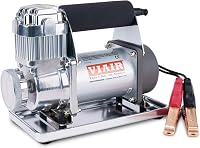
How to Use a Portable Air Pump for Car Tires
To use a portable air pump for car tires, screw or clamp the hose onto the valve stem, set your target PSI on the gauge, and switch the pump on until it stops or reaches the number. Check the reading against the door-jamb sticker, then remove the chuck and cap the valve.
On this page (10 sections)
- What should you check before turning the pump on?
- How do you connect the pump to the valve stem?
- How do you set the target pressure?
- How does a portable air pump inflate a tire?
- How do you inflate in steps and stop at the right pressure?
- How do you remove the pump and cap the valve?
- Which portable pump suits which job?
- What mistakes should you avoid?
- How do you use a portable air pump for car tires in cold weather?
- Which pump would we pick?
To use a portable air pump for car tires, connect the chuck to the valve stem, set the target pressure on the gauge, and run the pump until it stops or reaches your number. Check the result against the vehicle's recommended PSI, remove the chuck, and cap the valve.
That's the whole job. The parts that matter are the target pressure, a tight seal on the valve, and knowing when to stop.
A portable pump only fills the tire; your job is to tell it the right number and check that the reading matches.
What should you check before turning the pump on?
Check the tire's recommended pressure and the pump's charge first. The correct PSI is on the door jamb, fuel door or owner's manual, and it's the cold pressure you want.
Don't use the maximum pressure molded on the tire sidewall. That number is the tire's limit, not the pressure your car needs.
Most passenger cars sit between 30 and 36 PSI.
Look over each tire for a nail, bulge or deep cut before inflating. A pump can't fix a damaged tire, and adding air to a bulge makes the problem worse.
If the pump runs on a battery, charge it fully before a trip. A 12V pump plugs into the cigarette lighter socket, so start the engine so the battery isn't drained.
How do you connect the pump to the valve stem?
Take off the valve cap and push or screw the chuck onto the stem until it seals. You'll hear a short hiss when air escapes during the connection, then it should stop.
Most portable pumps use a screw-on chuck or a lever clamp. Screw-on fittings take a few turns and hold well.
A lever clamp flips down to lock, which is faster on a cold morning.
Keep the hose straight and avoid kinking it. A kinked hose can stop the airflow and make the gauge read low.
Some pumps include a deflation valve on the chuck. That's handy when a tire is overfilled, but keep it closed while inflating.
Check the fit once more before switching on.
How do you set the target pressure?
Set your target in the pump's display or dial before you start, using the car maker's PSI. Auto shut-off pumps stop at that number, so the setting matters more than watching the gauge.
On a digital pump like the AstroAI model, you preset the pressure and the pump stops when it's reached. The screen shows current and target values and supports PSI, BAR and KPA units.
A dial pump needs you to watch the needle. Stop a pound or two short of the target and top up in short bursts.
The ETENWOLF Vortex S6 adds seven preset modes and a preset pressure memory. Once you save your car's number, the next fill starts from it.
How does a portable air pump inflate a tire?
The pump's motor drives a piston or cylinder that pushes air through the hose and into the tire. The gauge reads the pressure as it climbs, and an auto shut-off stops the motor at your target.
If you want the full mechanical picture, our guide on how a tire inflator works walks through the piston, valve and gauge parts. For filling tires, the practical points are airflow and duty cycle.
Higher CFM means faster filling. The ETENWOLF Vortex S6 lists 1.5 CFM at 0 PSI and fills a 31-inch tire from 30 to 35 PSI in about 1 minute.
The AstroAI inflates a standard car tire from 30 to 36 PSI in under 40 seconds.
Duty cycle tells you how long the motor can run. The Vortex S6 lists a 100% duty cycle, so it can keep going without breaks.
The AstroAI supports up to 20 minutes of continuous operation.
How do you inflate in steps and stop at the right pressure?
Run the pump and watch the gauge, stopping at your target or letting auto shut-off do it. On a manual pump, pause every 30 seconds or so and recheck the reading.
Tires gain pressure as they heat up while filling. A tire that reads 35 PSI right after a long fill may settle lower once it cools.
For a daily top-up that difference is small.
If you overshoot, let air out through the chuck's deflation valve or the valve stem itself. Recheck and top up again.
Small bursts are easier to control than one long run.
Auto shut-off pumps handle this for you. The CRAFTSMAN inflator lets you set pressure in PSI, BAR or kg/cm² and shuts off automatically to prevent over-inflation.
How do you read the gauge correctly?
Read the gauge with the pump running or right after it stops, not minutes later. Pressure creeps down as the hose equalizes, so an early reading is closer to what went in.
Compare the pump's number with a separate gauge or your car's tire-pressure display. Small pumps can drift by a pound or two.
Pick one gauge as your reference and stick with it.
How do you remove the pump and cap the valve?
Switch the pump off, release the chuck, and put the valve cap back on right away. Expect a short puff of air as the fitting comes loose.
With a screw-on chuck, unscrew it quickly and straight. With a lever clamp, flip the lever up and pull.
Don't twist the valve stem while removing the fitting.
Cap every valve when you finish. The cap keeps dirt and moisture out of the valve core.
Then coil the hose and store the pump out of the weather.
Which portable pump suits which job?
Pick a battery pump for regular top-ups and a 12V pump for backup power. Cordless pumps skip the cable, while 12V models run as long as the car battery does.
The AstroAI is the pick for most people because it offers both. Its 20V battery handles home fills, and the 12V car adapter covers travel.
The 160 PSI maximum covers cars, SUVs and bikes.
The ETENWOLF Vortex S6 suits heavy-duty vehicles and long trips. Its 19200 mAh battery inflates up to 18 F150 tires from 30 to 35 PSI on a full charge.
The 1000-lumen LED doubles as a camping lantern.
The CRAFTSMAN is the budget-friendly corded choice. It weighs only 1.9 lbs and has a 10 ft 12V plug and a 2.17 ft air hose.
It's compact enough to leave in the trunk.
For trucks and larger tires, our roundup of the best portable air pumps for truck tires covers higher-capacity options. If you want to skip the cable entirely, compare the best cordless air compressors.
Drivers who prefer a plugged-in pump can browse the best 12V air compressors.
What mistakes should you avoid?
Don't inflate to the sidewall number, overfill past the target, or leave the pump connected afterward. Those three mistakes cause most pressure problems.
Don't start filling without checking the current pressure. You may already be at spec and just adding heat and wear.
Check cold, fill to spec, and stop.
Don't run a pump past its duty cycle without a rest unless it's rated for continuous use. And don't force a chuck that won't seat; a cross-threaded valve stem leaks.
Don't ignore a tire that keeps losing pressure. A pump gets you to a shop, but a slow leak needs a repair.
Finally, don't store a battery pump in a hot trunk for months, because heat shortens battery life.
How do you use a portable air pump for car tires in cold weather?
Inflate when the tire is cold and expect the pressure to rise as you drive. Cold rubber reads lower, so fill to the car maker's PSI and let the tire warm up on the road.
Cold air also slows a battery pump. Charge it indoors before a winter trip and keep it in the cabin, not the trunk.
A 12V pump plugged into a running engine avoids battery drain on a freezing morning.
Check the valve stem for ice before connecting. A frozen core can stop airflow and make the gauge climb slowly.
Warm the stem with your hand if needed.
Which pump would we pick?
For most drivers, the AstroAI Cordless Tire Inflator is the easiest way to handle routine tire pressure, with a battery for home and a 12V cord for the road. The ETENWOLF Vortex S6 is the better fit for trucks and heavy loads.
The CRAFTSMAN suits anyone who wants a small, light 12V pump in the trunk.
Whichever you choose, the routine is the same: know how to use a portable air pump for car tires, set the maker's pressure, fill in steps and check the gauge. Cap the valve, and recheck your tires once a month when they're cold.
Frequently asked questions
How long should a portable air pump run at once?
Follow the duty cycle in the pump's instructions. The ETENWOLF Vortex S6 lists a 100% duty cycle with its dual cylinders and cooling system, so it can run continuously.
Many smaller pumps need short rests between tires to keep the motor cool.
Can I leave a portable air pump connected to the tire?
No. Remove the chuck after the pump stops and cap the valve stem.
A connected hose can slowly leak air or let the pump's gauge keep reading while you drive away.
Store the hose coiled so the fitting stays clean.
What pressure should I set for my car tires?
Use the vehicle maker's recommended pressure, printed on the door jamb, fuel door or in the owner's manual. That figure, not the number molded on the tire sidewall, is the cold pressure you should target.
Check tires when they are cold for the most accurate reading.
Why does my pump gauge disagree with the car's display?
Small gauges often differ by a pound or two from the car's sensors. Use one gauge as your reference and adjust to that.
The ETENWOLF Vortex S6 lists gauge accuracy of +/-1 PSI, which keeps the difference small.