What PSI Should Truck Tires Be?
For what PSI truck tires should be, use the cold pressure on the truck's tire placard or in its owner's manual. The right PSI depends on your truck, tire setup, and load, so the tire sidewall's maximum is not your target.
On this page (9 sections)
- What PSI should truck tires be set to?
- Where can you find the recommended truck tire pressure?
- Why should you check truck tires when they're cold?
- How should you handle truck tire pressure when towing?
- Does cold weather change truck tire pressure?
- How do you add air without overinflating?
- Which portable inflator fits your truck and routine?
- What should you do if truck tire pressure keeps dropping?
- How do you decide what PSI truck tires should be?
Truck tires should be inflated to the cold PSI on the vehicle's tire placard or in its owner's manual. If you're asking what PSI truck tires should be, start with that vehicle-specific number, because the right pressure varies with the truck, tire setup, and load.
Check pressure before driving, while the tires are cold. If you tow or carry a heavy load, follow the truck and tire makers' guidance for that use.
Don't use the tire sidewall's maximum pressure as your everyday target.
What PSI should truck tires be set to?
Set each tire to the cold pressure specified for your truck and tire setup. There isn't one correct PSI for every pickup or work truck, and the front and rear recommendations may differ.
Find the tire and loading information placard, usually on the driver-side door jamb, or check the owner's manual. Use the pressure shown for the installed tire size and the truck's approved configuration.
The tire sidewall shows a maximum pressure limit for that tire. It doesn't give the recommended pressure for your truck's normal driving or a specific load.
If your tires differ from the placard's size or type, ask a qualified tire professional.
Where can you find the recommended truck tire pressure?
Use the truck's tire and loading placard as your first reference. It gives the cold PSI recommended for the vehicle's original tire setup.
The owner's manual may have additional instructions for carrying cargo or towing. Read those before changing pressure.
Stay within the truck's payload and towing limits. The right tire pressure can't make an overloaded truck safe.
If the placard is missing or the current tires don't match its information, contact the vehicle maker or a tire shop. Don't copy pressure from a similar-looking truck; equipment and recommendations can differ.
Why should you check truck tires when they're cold?
A cold reading gives you a consistent basis for setting pressure. Driving warms tires and can raise the gauge reading, so check before a trip or after the truck has been parked for several hours.
If you have to check after driving, use the manual's guidance for warm tires. Don't release air just to make a warm tire match its cold-pressure recommendation.
That can leave it underinflated once it cools.
Use the same reliable gauge for all tires and compare each reading with the truck's specified target. Build a regular check into your routine; how often you should check tire pressure explains when to make it part of vehicle care.
How should you handle truck tire pressure when towing?
Follow the pressure instructions for your truck, tires, and towing load. Added cargo can affect the appropriate pressure, but the correct value comes from the vehicle or tire maker, not a guess.
Check the tires cold before loading and before a long trip. Confirm that the trailer, hitch, and cargo remain within the truck's stated limits, too.
Follow any separate pressure guidance in the manual for a loaded truck under the conditions it covers.
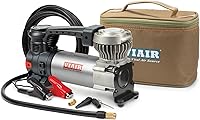
A portable inflator is useful for topping up at home or on the road, but it doesn't determine the correct PSI. The VIAIR 300P connects to a vehicle battery and is intended for truck, Jeep, and SUV tires up to 33 in in overall diameter.
The NOCO AIR20 gives you a digital target setting from 15 to 100 PSI and stops automatically at the selected pressure. Its 20 ft power cord reaches around a truck, while its 3 ft inflation hose connects at the tire.
Set the inflator to the truck's recommended cold PSI, then confirm the pressure with a gauge if needed. The inflator's maximum pressure is a tool limit, not the target for your tires.
Does cold weather change truck tire pressure?
Check your tires as temperatures fall and restore them to the recommended cold PSI. A reading that was correct in mild weather may be lower after a cold spell.
Check every tire, including the spare if it's accessible and the manual specifies its target. Recheck after a major temperature change and before a long drive.
Don't add extra air in advance to account for future warming.
Use the vehicle's cold-pressure recommendation, including in winter. For unusual conditions or a truck with a changed tire setup, consult the manual or a tire professional.
How do you add air without overinflating?
Add air in short bursts and check the pressure as you go. Stop when the cold tire reaches the pressure specified for that truck and tire setup.
Remove the valve cap and connect the hose securely. Add a little air, then pause to check the pressure with a gauge.
Repeat as needed, replace the cap, and use the same process for each tire.
The ETENWOLF Vortex S7 displays current and target pressure and stops automatically at the target. Its cordless design suits drivers who want to inflate without connecting to the truck's battery.
Confirm the final reading with a gauge if the inflator's display doesn't match your expectations. Follow this guide to filling tires with an air compressor for the connection and inflation steps.
Which portable inflator fits your truck and routine?
Choose an inflator by tire size, power source, and how you want to manage pressure. A higher maximum PSI alone doesn't make a model a better match for your truck.
The VIAIR 300P suits drivers who want a battery-clamp compressor for truck, Jeep, or SUV tires up to 33 in. It requires the engine to run and has a 33% duty cycle, so follow its operating and cooling instructions.
Skip it if you need a cordless unit.
The NOCO AIR20 is a fit for drivers who want a digital pressure target and automatic shutoff in a 12V battery-powered unit. Its set pressure range is 15 to 100 PSI, and it can run continuously for 15 minutes.
Skip it if your tire's target is outside that range or you need a cordless inflator.
The ETENWOLF Vortex S7 fits drivers who want a cordless inflator with a current-and-target display and automatic stop. It lists a 100% duty cycle and a maximum pressure of 160 PSI.
Skip it if you prefer a unit powered directly by the truck's battery or if you need it for a stand-up paddleboard.
For more options, compare tire inflators for cars and garages. If you want a model designed for a vehicle battery, see 12V air compressors for car and truck tires.
What should you do if truck tire pressure keeps dropping?
Check the tire for visible damage, a loose valve, or a puncture, and get recurring pressure loss inspected. Repeatedly adding air can hide a problem without fixing it.
Avoid driving on a tire that looks damaged, is very low, or won't hold air. Arrange help from a tire professional.
Check all four tires again before towing or a long drive. Keep the truck's placard pressure handy.
How do you decide what PSI truck tires should be?
Use the placard or manual for the cold PSI, then follow any specific guidance for your load or towing conditions. Pick an inflator that fits your tire size and preferred power source, and use a separate gauge to check the final reading.
For regular checks, keep a gauge accessible and use the same target for the same approved setup. If the tire size has changed or pressure keeps falling, ask a tire professional before relying on a new PSI.
See pressure and care advice for winter and towing for related guidance.
Frequently asked questions
What PSI should truck tires be?
Use the cold tire pressure on the truck's placard or in its owner's manual. The correct number varies by truck, tire setup, and load, so don't substitute the maximum PSI printed on the tire sidewall.
Check all tires with a gauge before driving far.
Should truck tires have the same PSI when towing?
Follow the truck and tire makers' instructions for pressure when towing, including any guidance for the added load. Don't guess or inflate to the sidewall maximum.
Check pressure while the tires are cold and confirm the load stays within the truck and tire limits.
Does cold weather lower truck tire pressure?
Cold weather can lower tire pressure, so check it when the tires are cold as temperatures fall. Inflate to the vehicle's recommended cold PSI, then recheck as needed.
Don't let air out of a warm tire just because its pressure reading is higher after driving.
Can I use the PSI printed on the tire sidewall?
The sidewall's maximum pressure is not the truck's recommended target. Use the pressure on the vehicle placard or in the owner's manual, which is set for that vehicle and its approved tire setup.
Ask a tire professional if the placard and your current tires don't match.