How to Choose an Air Compressor for Home Use
To choose an air compressor, match its airflow at your tool’s working pressure to the tool’s demand. Then choose tank size, noise level, power and portability for your home projects.
On this page (10 sections)
- How do you choose an air compressor for home use?
- What compressor size fits your home projects?
- Why does CFM matter when you choose an air compressor?
- How much tank capacity do you need?
- What pressure rating should you look for?
- Should you choose an oil-free or oil-lubricated compressor?
- How loud is too loud for a home garage?
- How should you set up and care for a home compressor?
- What common mistakes should you avoid?
- Which air compressor should you choose for home use?
To choose an air compressor for home use, match its airflow at your tool’s working pressure to the tool’s demand. Then choose tank size, noise, power and portability around the projects you plan to do.
A compressor for tire inflation and occasional brad nailing has different needs from one for framing or repeated shop work. Start with the tools and the space you have, rather than choosing by tank size alone.
This guide explains how to choose an air compressor and compares compact, quiet and larger-tank options for home projects. For more models organized by task, see our home air compressors by job.
How do you choose an air compressor for home use?
Choose an air compressor by checking tool airflow first, then pressure, tank size and practical fit. A high maximum PSI by itself does not show whether a compressor can keep a tool supplied with air.
Start with the tools you own or expect to use. Find each tool’s required PSI and CFM, then check whether the compressor provides enough CFM at that pressure.
If you plan to run more than one tool at a time, add their air demands together. Use the combined demand to check whether the compressor can keep up.
Consider how the tools draw air. A nailer uses short bursts, while some jobs such as sanding or spray painting draw air more steadily.
This work pattern can change how much airflow and reserve capacity you need.
Finally, think about where the compressor will sit, how often you will move it and whether its noise will bother people nearby. Those practical details help narrow your choices after you confirm the tool requirements.
What compressor size fits your home projects?
The right compressor size depends on airflow needs and work duration, not tank capacity alone. A larger tank stores more compressed air between pump cycles, but it does not automatically provide more continuous airflow.
| Home task | What to compare | Starting point |
|---|---|---|
| Tire inflation and small blow-off tasks | Fittings, portability and enough pressure | A compact 2-gallon model may suit occasional use |
| Brad or finish nailing | Tool CFM at working pressure and recovery | A portable 6-gallon compressor may suit intermittent work |
| Several nailers or larger-body nailers | Airflow, pressure and combined demand | Compare models with higher CFM at 90 PSI |
| Spray painting or air brushing | Tool airflow and suitable accessories | Check the tool’s requirements before choosing |
| Repeated shop tasks | Sustained airflow, recovery and tank size | Consider a larger compressor if space and power allow |
These are starting points. Check your tool’s requirements and the compressor’s output before buying, since tank size alone cannot confirm a match.
A compact unit is easier to store and move, but may need more recovery pauses during demanding work. A larger compressor can offer more reserve, while taking up more space and requiring more effort to move.
Why does CFM matter when you choose an air compressor?
CFM tells you how much air a compressor delivers, while tank capacity tells you how much compressed air it stores. Compare CFM at the PSI your tool requires, because a rating at a different pressure may not reflect what the tool needs.
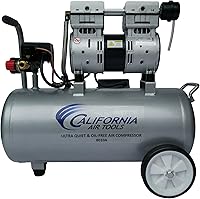
The California Air Tools 8010A delivers 2.20 CFM at 90 PSI and has an 8-gallon tank. Its stated noise level is 60 dBA, which makes it a candidate for a home garage where sound matters, provided its airflow suits your tool.
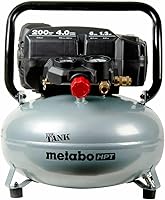
The Metabo HPT EC914S delivers 4 CFM at 90 PSI and has a 6-gallon tank. Metabo HPT says it can run several nailers at once, including two framing nailers, so consider it for nailer work that fits its airflow.
A tank can supply air for short bursts, but ongoing demand depends on pump output. If a tool draws air faster than the compressor can deliver it, you will need to pause while pressure builds again.
How much tank capacity do you need?
Tank size affects how much compressed air is stored before the pump refills it. Choose enough reserve for your work pace, while keeping in mind that pump airflow sets the longer-term limit.
A small tank can be practical for short tasks and easy storage. A larger tank can offer more reserve for repeated bursts, but it also takes more room and can weigh more.
The Klutch 20-Gallon has an oil-free pump, wheels and a handle, with stated output of 4.2 SCFM at 90 PSI. At 90 lb, it makes more sense for a workshop location where it can stay on its wheels than for frequent carrying.
The Craftsman 2-Gallon weighs 11.11 kg and includes an air hose, tire pressure gauge, nozzle and other accessories. Its compact format may suit occasional garage tasks where storage space is limited.
For a closer look at one common middle ground, read is a 6-gallon air compressor enough for home use.
What pressure rating should you look for?
Choose a compressor with a maximum PSI at or above your tool’s required pressure, and check its airflow at the tool’s working PSI. Maximum pressure cannot make up for too little CFM.
Many air tools list both PSI and CFM requirements. If a tool needs 90 PSI, compare the compressor’s CFM at 90 PSI instead of relying on its highest pressure rating.
The Metabo HPT EC914S is rated up to 200 PSI and delivers 4 CFM at 90 PSI. The Klutch 20-Gallon is rated up to 175 PSI and provides 4.2 SCFM at 90 PSI.
Use your tool’s manual to confirm its operating range. If you use a regulator, set the pressure according to the tool’s instructions.
Should you choose an oil-free or oil-lubricated compressor?
An oil-free compressor may suit a home user who wants less pump maintenance, while an oil-lubricated model may suit someone willing to follow its oil checks and changes. Pump type does not tell you how quiet or powerful the compressor will be.
The Craftsman, California Air Tools and Klutch models here use oil-free pumps. That can reduce oil-related upkeep, but you still need to follow the compressor’s care instructions, including draining condensation when required.
Check the maintenance steps for any model before buying. If you are considering a pancake compressor, see whether pancake air compressors need oil.
How loud is too loud for a home garage?
Noise matters most when you work indoors, share walls with living space or use the compressor when others are home. Compare stated decibel levels and where you plan to use the compressor alongside airflow and tank capacity.
The California Air Tools 8010A is rated at 60 dBA. The Klutch is rated at 80 dB, the Metabo HPT EC914S at 73 dB and the Craftsman at 78 dB.
The figures give you a basis for comparison, but your room and placement affect what you hear. A hard-walled garage can sound different from a more open space, and distance changes how loud the compressor seems.
See our quiet air compressor picks for a home garage if noise is your main constraint.
How should you set up and care for a home compressor?
Set up a compressor on a stable surface with enough room for airflow, access to its controls and space to connect the hose. Check the manual for placement, electrical requirements and any specific setup steps before turning it on.
Use a hose and fittings that connect securely to the compressor and tool. Inspect connections for leaks, set the regulator to the tool’s required pressure, and keep the hose routed where it will not snag or become a trip hazard.
After use, switch off and unplug the compressor as directed. Drain tank moisture according to the manual, and store the hose and accessories so they stay clean and ready for the next job.
Oil-free does not mean maintenance-free. Follow the manufacturer’s instructions for tank draining and other routine checks.
Our guide on how to drain an air compressor tank explains that maintenance step.
What common mistakes should you avoid?
The most common buying mistake is choosing by maximum PSI or tank size alone. Those numbers cannot confirm that a compressor will deliver enough air for the tool you want to run.
Avoid these other common errors:
- Ignoring CFM at working pressure: Match the compressor’s output to the tool’s demand at the same PSI.
- Assuming a larger tank solves low airflow: A tank adds stored air, but it does not raise the pump’s ongoing output.
- Forgetting combined tool demand: If you intend to run tools together, account for the airflow each one needs.
- Overlooking how long a tool runs: Short bursts and sustained use place different demands on a compressor.
- Skipping the workspace check: Measure the space and consider weight, wheels, noise and access to power.
- Skipping routine care: Follow the manual, including instructions for draining condensation.
If a compressor cannot keep up with a tool, the answer may be a better airflow match, shorter work intervals or a different compressor size. Do not assume that changing the regulator will increase the air the pump can deliver.
Which air compressor should you choose for home use?
Choose the compressor that meets your tools’ airflow needs and fits your workspace. For occasional tasks and compact storage, consider the Craftsman 2-Gallon; for quieter indoor use, consider the California Air Tools 8010A; for nailer work, consider the Metabo HPT EC914S; and for a workshop with room for a wheeled unit, consider the Klutch 20-Gallon.
The California Air Tools 8010A scores 9.2 and stands out here for its stated 60 dBA noise level and 8-gallon tank. The Metabo HPT EC914S scores 9 and offers 4 CFM at 90 PSI for compatible nailer work.
The Klutch 20-Gallon scores 8.2 and suits a dedicated workshop better than frequent carrying. The Craftsman 2-Gallon scores 7.9 and is the compact choice for occasional tasks.
Before you decide, compare your tool’s CFM and PSI requirements with the compressor’s output, then check space, power, movement and care needs. For a broader task-based comparison, see our guide to what size air compressor you need.
Frequently asked questions
What size air compressor is best for home use?
The right size depends on your tools and how long you use them. A 2-gallon tank may suit occasional inflation and light tasks, while a 6- or 8-gallon tank gives you more stored air for intermittent tool use.
For longer or higher-demand work, compare the tool’s airflow needs with the compressor’s output before choosing.
Is a 6-gallon air compressor enough for home use?
A 6-gallon compressor can suit intermittent home projects such as trim nailing when its airflow meets the tool’s requirement. It may need to recover during repeated or sustained use.
Check the tool’s CFM at its working PSI, then compare it with the compressor’s output at that pressure.
What matters more, PSI or CFM?
Both matter, but CFM at the tool’s working pressure is often the more useful check for whether a compressor can keep it running. PSI is pressure; CFM is air volume delivered.
Confirm the compressor meets the tool’s required PSI and airflow before you buy.
Should I get an oil-free air compressor for my garage?
An oil-free compressor may suit a home garage if you want less pump maintenance. It still needs care, such as draining tank moisture according to the manufacturer’s instructions.
Compare noise, airflow and pressure too, since pump type alone doesn’t determine how well a compressor fits your jobs.
How quiet should a home air compressor be?
There is no single right noise level for every garage. Compare the stated decibel levels and consider the compressor’s distance from living areas and neighbors.
A quieter model can be less disruptive indoors, but make sure its airflow and pressure also match your tools.