Is a 6 Gallon Air Compressor Enough for Home Use?
Yes, a 6 gallon air compressor is enough for many home jobs, including trim nailing, brad nailing, and topping up tires. It may fall short for tools that need steady airflow over long periods.
On this page (7 sections)
- Is a 6 gallon air compressor enough for home use?
- What can a 6 gallon compressor do around the house?
- When is a 6 gallon compressor too small?
- How do you choose between two 6 gallon compressors?
- When should you choose a larger tank?
- How can you tell if your compressor is keeping up?
- Is a 6 gallon air compressor enough for your home?
Yes, a 6 gallon air compressor is enough for many home jobs, including trim nailing, brad nailing, and topping up tires. It may fall short when a tool needs steady airflow for long stretches, so match the compressor's CFM at the working pressure to the tool's needs.
For many DIY projects, a pancake compressor offers a useful balance of capacity and portability. The right choice depends less on tank size alone and more on the tool you plan to run, how often it cycles, and how much airflow the work demands.
Is a 6 gallon air compressor enough for home use?
A 6 gallon compressor is enough for many light and medium home tasks. It can suit nail guns, inflation, and short bursts with compatible tools when its pressure and airflow match the job.
The tank stores compressed air, while the pump replenishes it. A larger tank can provide a longer reserve before the motor needs to refill it, but the compressor's airflow rating helps show how quickly it can keep supplying a tool.
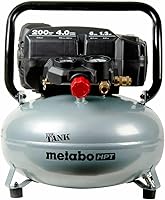
The [Metabo HPT EC914S 6-Gallon Pancake] combines a 6 gallon tank with 4 CFM at 90 PSI. That published airflow makes it a candidate for home nailing projects.
A 6 gallon tank doesn't mean every air tool will run continuously. Check your tool manual for the required PSI and CFM, then compare those figures with the compressor's output.
What can a 6 gallon compressor do around the house?
A 6 gallon compressor can handle tasks that use short bursts of air and fit its output. Nailing and occasional inflation are common examples, while long-running tools deserve a closer airflow check.
Is a 6 gallon compressor enough for nail guns?
Often, yes, especially for trim and brad nailing. Nail guns use short bursts, which can give a compressor time to recover between shots.
For frequent framing or roofing, look at the gun's air demand and how many tools need to run at once. Metabo HPT says the EC914S can run combinations that include 2 framing nailers, 2 roofing nailers, 2 siding nailers, 3 finish nailers, or 5 brad nailers.
The best air compressors for nail guns and trim work can help you compare compressor options by the kind of nailing you do. For a direct size comparison, see our guide to the best 6 gallon air compressors.
Can you use a 6 gallon compressor for tires?
Yes, a compatible compressor can inflate tires, but a dedicated tire inflator may be handier for occasional roadside use. Check the tire's recommended pressure and use a gauge to avoid overinflating.
A shop compressor needs an air hose and a tire chuck or inflator attachment. If you mostly need to keep a car ready for the road, compare the options in our best tire inflators guide.
For the right pressure and routine checks, read how often you should check tire pressure. Use the vehicle or tire maker's guidance for the correct PSI.
When is a 6 gallon compressor too small?
A 6 gallon compressor may be too small when a tool needs more airflow than the pump can supply or runs for long periods. In that case, the motor may cycle often and the tool may lose performance while the tank refills.
Before buying, check the tool's CFM requirement at its stated PSI. Compare it with the compressor's airflow at the same pressure, and allow some margin if the tool will run often or alongside other tools.
The [Metabo HPT 6-Gallon 165 PSI Pancake] provides 2.8 CFM at 90 PSI and 3.7 CFM at 40 PSI. Those figures can help you compare its output with your tool's requirements.
A 165 PSI maximum pressure does not tell you how much air a tool can use continuously. Match the airflow at the pressure your tool requires.
Is a 6 gallon compressor enough for painting or sanding?
It may work for a small, low-demand tool, but don't assume it can keep up with continuous spraying or sanding. These jobs can use air for longer periods than nailing does.
Check the tool maker's airflow guidance and compare it with the compressor's CFM at the operating pressure. If the compressor's output is below the tool's demand, the tank only provides a temporary reserve.
A small compressor may still help with brief touch-up work if the sprayer allows it and the airflow matches. For a large paint job or extended sanding, a larger compressor may be a better fit.
Is a 6 gallon compressor enough for blowing out sprinklers?
It depends on the sprinkler system and the compressor's airflow, so tank capacity alone isn't enough to decide. Check the system's instructions and use a compressor setup that can deliver the required air safely.
Our guide to choosing an air compressor size for blowing out sprinklers explains what to consider before starting. Follow the system maker's instructions, since using the wrong pressure or method can damage components.
How do you choose between two 6 gallon compressors?
Compare airflow at the pressure your tools need, then consider weight, couplers, and the kind of work you do. A higher maximum PSI by itself doesn't show whether a compressor can keep up.
The EC914S lists 4 CFM at 90 PSI and weighs 41 lb in its specifications. Metabo HPT also describes it as a 42 lb compressor and says it can run several nailer combinations.
The EC711S lists 2.8 CFM at 90 PSI and weighs 38.5 lb. It has 2 universal quick couplers, which can make changing between compatible tools more convenient.
Choose based on the airflow your tools need, not on tank size or maximum PSI in isolation. For a broader comparison of home options, see how to choose an air compressor for home use.
When should you choose a larger tank?
Choose a larger compressor when your tools need more sustained airflow or you want fewer pauses for recovery. A larger tank can add reserve capacity, while the pump's CFM still determines how quickly it replenishes air.
The Klutch 20-Gallon has a 20 gallon tank and lists 4.2 SCFM at 90 PSI in its product description. Its 90 lb weight and large rubber wheels make it a different kind of garage setup from a small pancake compressor.
This is a better size to consider if you expect longer tool use and have room to move or store it. It may be more compressor than you need for occasional inflation or a few trim nails.
For a larger garage setup, compare the options in our home garage air compressor guide. If portability matters most, review pancake versus hot dog compressors.
How can you tell if your compressor is keeping up?
Watch for slow recovery, frequent motor cycling, or a tool that loses power during use. These signs suggest the job may demand more airflow than the compressor can supply at that pressure.
Work in shorter bursts when the tool allows it, and give the compressor time to recover. Keep the hose and fittings in good condition, since leaks can waste air and make the pump work harder.
Drain the tank as directed by the compressor's manual. Our guide to draining an air compressor tank explains why this routine matters.
If the tank pressure stops rising or the compressor struggles with a task it handled before, check for leaks and follow the troubleshooting steps in why an air compressor won't build pressure.
Is a 6 gallon air compressor enough for your home?
Choose a 6 gallon compressor for nail guns, inflation, and other jobs that use brief bursts of air. Pick a larger compressor if your tools need sustained airflow or your work involves long runs between pauses.
Compare each tool's CFM and PSI needs with the compressor's output at the same pressure. For a broader size decision, start with what size air compressor you need.
Frequently asked questions
Is a 6 gallon air compressor enough for home use?
Yes, a 6 gallon compressor can suit home tasks such as trim nailing, brad nailing, and occasional tire inflation. Check the tool's required airflow and pressure against the compressor's output, since tank size alone doesn't tell you whether it can keep up during repeated or continuous use.
Can a 6 gallon compressor run an impact wrench?
It depends on the impact wrench's airflow needs and how often you'll use it. Compare the tool's CFM requirement at its working pressure with the compressor's output, and allow for recovery between bursts.
A tank can supply a short reserve, but it cannot make an undersized pump keep up indefinitely.
Can a 6 gallon compressor run a paint sprayer?
Some small sprayers may work, but many paint sprayers need steady airflow that a compact compressor may not maintain. Check the sprayer's CFM and PSI requirements, then compare them with the compressor's delivered airflow at that pressure.
For larger or continuous painting jobs, consider a compressor designed for that demand.
Is a 6 gallon compressor good for nail guns?
A 6 gallon compressor is often a practical size for nail guns because many nailing jobs use short bursts of air. Check the gun's pressure range and air use, especially if several people will work at once.
Some 6 gallon models publish airflow figures and nailer combinations to help you judge the fit.