What Size Air Compressor Do I Need?
Choose an air compressor by the tool’s required CFM at its working PSI, then use tank size to judge how long it can run between pauses. For tire inflation and occasional short tasks, a small portable unit may suit; demanding or continuous tools need more airflow.
On this page (5 sections)
Choose an air compressor by the tool’s required CFM at its working PSI, then use tank size to estimate how long it can run before pressure drops and the pump needs to catch up. A small portable unit may suit tires and occasional short tasks, while tools used continuously need enough airflow to keep pace.
The phrase “air compressor for garage” can cover a tire top-up, trim work, painting or running an air tool for several minutes at a time. Those jobs place different demands on a compressor, so start with the job rather than a gallon number.
For a quick overview of home-use choices, see our guide to choosing an air compressor for home use. If you already have a 6-gallon model in mind, our 6-gallon compressor guide explains what that tank size can and cannot tell you.
What size air compressor do I need for my main job?
Choose a compressor that meets the tool’s CFM requirement at the pressure you’ll use. A compressor’s maximum PSI does not tell you how much air it can deliver continuously.
CFM means cubic feet per minute. It measures airflow, while PSI measures pressure.
Check the tool manual or label for both figures, and compare them with compressor output at the same PSI.
| Garage job | What to check | Sizing direction |
|---|---|---|
| Tire inflation | Inflator’s pressure range and intended use | A compact portable compressor may be enough for occasional top-ups |
| Brad or finish nailing | Tool CFM and operating PSI, plus whether several nailers run together | Tank capacity and recovery matter for repeated bursts |
| Framing or roofing nailing | CFM and PSI for the nailer, especially for multiple tools | Compare compressor airflow closely with the combined demand |
| Spraying | Gun CFM and pressure, plus how long each pass lasts | Continuous airflow matters more than a large tank alone |
| Air sanding or grinding | Tool’s sustained CFM and pressure | Choose for the high ongoing demand, not just peak PSI |
| Blowing out sprinklers | Regulator setting and airflow through the system | Follow the sprinkler maker’s pressure and procedure limits |
These are starting points, not universal tool ratings. Models within the same tool type can have different air needs, so use the specific manual before choosing.
If you need a compressor mainly for tire work, compare it with a purpose-built tire inflator. A garage compressor can inflate tires too, but its tank, hose and fittings may make it less convenient to carry in a vehicle.
How do I compare CFM and PSI?
Compare the compressor’s delivered CFM at the tool’s working PSI with the tool’s stated CFM at that PSI. If the tool asks for more air than the compressor supplies, it may pause or lose performance as tank pressure falls.
Some compressors advertise airflow at a lower pressure than your tool uses. Don’t compare those numbers as if they were measured at the same condition; look for the compressor’s output at the target PSI.
For tools with a range of operating pressures, set the regulator according to the tool maker’s instructions. The tank’s maximum pressure is not a target setting for every attachment.
How much airflow should I allow for?
Choose a compressor whose delivered airflow meets or exceeds the tool’s stated demand. For a tool used in long sessions, leave some margin if you can, since frequent recovery can interrupt work.
When several tools may run together, add their airflow needs at the same working pressure. A compressor sized for one nailer may not keep two nailers going at the same pace.
The duty pattern matters too. A nailer uses short bursts, while sanding and spraying can draw air steadily.
Matching only the peak pressure ignores how long the tool keeps drawing air.
How does tank size affect the compressor you need?
A larger tank stores more air for short bursts, but the pump’s CFM determines how quickly it can replace that air. Tank gallons alone do not tell you whether a compressor will keep a tool running.
A 2-gallon tank can be easier to store and move than a larger unit. It may suit a user who does brief jobs and can pause between them.
A 6-gallon tank offers more stored air for intermittent tasks such as nailing. It still needs adequate airflow for the tools you plan to run, and the pump may need recovery time during repeated use.
An 8-gallon tank stores more air than a 6-gallon tank, but that does not automatically make it a better choice for every job. Look at its CFM, pressure, size, noise and mobility as well.
For examples of what a 6-gallon tank can handle around the house, read is a 6-gallon air compressor enough for home use?.
Does a bigger tank always mean a better compressor?
No. A bigger tank helps with short bursts, while higher delivered CFM helps sustain air use.
If the pump cannot match a tool’s ongoing demand, extra tank capacity only delays the pressure drop.
Think of the tank as a reserve and the pump as the refill rate. For a nailer used now and then, reserve capacity can be useful; for a sander used continuously, airflow is usually the more important comparison.
A large tank may also take more space and be harder to move. Choose the smallest setup that meets your airflow needs and fits the place where you will use it.
Which compressor size fits common garage tasks?
Choose by the most demanding task you expect to do regularly, then check that the compressor also suits smaller jobs. These examples show how tank size, airflow and portability trade off for different garage routines.
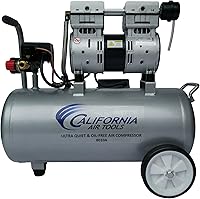
8-gallon compressor for a quieter workspace
The California Air Tools 8010A combines an 8-gallon tank with 2.2 CFM at 90 PSI and a stated 60 dBA noise level. Its 37.3 lb weight and included wheel kit may suit a garage where you want to move the compressor around.
The 8010A has a maximum pressure of 120 PSI. Its airflow is lower than the Metabo HPT and Makita examples, so compare the output with your tools’ requirements before choosing it.
Best for a quieter workspace where rolling mobility matters. Don’t size by tank capacity alone if your tools draw air continuously.
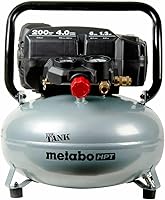
6-gallon pancake for nailers and intermittent tasks
The Metabo HPT EC914S delivers 4 CFM at 90 PSI and has a 6-gallon tank. Check its airflow against your tools’ needs, especially if you plan to use more than one nailer.
Metabo HPT says the compressor can run combinations of nailers, including two framing nailers or five brad nailers. Confirm your specific tools’ requirements before relying on a combined setup.
At 41 lb, it is designed to be portable. Its 200 PSI maximum pressure does not replace the need to check CFM at each tool’s operating pressure.
Best for intermittent nailing with a larger air reserve. If your main task is continuous sanding or spraying, match the tool’s sustained airflow requirement first.
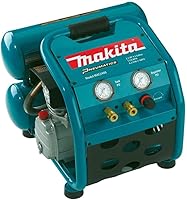
Higher airflow for demanding tools
The Makita MAC2400 delivers 4.2 CFM at 90 PSI with a 4.2-gallon tank. Check whether that airflow meets the requirements of the tools you plan to use.
Its 2.5 HP motor and oil-lubricated cast-iron pump are built for job-site use, and the roll-cage construction protects the compressor. The pump needs the care described in its maintenance instructions.
The Makita weighs 77 lb, so it is less convenient to move than the smaller Craftsman or pancake compressor. Its airflow rating is higher than the other examples here.
Best for tools that need more airflow when the heavier compressor fits your workspace. Check each tool’s CFM demand, since this compressor may not suit every continuous-use tool.
Small portable compressor for tires and short jobs
The Craftsman 2-Gallon Oil-Free has a 2-gallon tank, a 1/3 HP motor and a maximum pressure of 125 PSI. Its 19 lb weight and compact design may suit brief jobs and small storage spaces.
It has two quick couplings and includes a tire pressure gauge, air chuck, blow gun and several fittings. Check that the fittings match your hose and tools.
The Craftsman weighs 19 lb, less than the other compressors covered here. Its product data does not specify CFM, so check whether it can meet the airflow needs of your tools before choosing it for more than brief tasks.
Best for brief garage jobs where compact storage and portability matter. For repeated tool use, compare the tool’s CFM requirement with a compressor that has a published airflow rating.
What else should I check before choosing a garage compressor?
Check power, noise, portability and maintenance alongside airflow and tank size. Those details help you decide whether a compressor fits your garage and how you’ll care for it.
- Power supply: Confirm the outlet and circuit meet the compressor’s requirements. Don’t assume a larger motor can run on any garage circuit.
- Noise: Compare the stated noise level if the compressor will run near living areas or neighbors. The California Air Tools 8010A is rated at 60 dBA, while the Craftsman is rated at 78 dB.
- Portability: Compare weight, handles and wheels with how far you need to move the unit. A heavier compressor may work well in one spot but be awkward to store.
- Maintenance: Oil-free pumps avoid oil changes, while oil-lubricated pumps require the care described in their manuals.
- Storage: Measure the compressor footprint and leave room to reach controls, drain the tank and connect a hose.
Tank water needs regular draining because moisture collects as compressed air cools. Follow your compressor’s manual for instructions; our guide explains how to drain an air compressor tank.
If airflow drops unexpectedly, leaks, worn parts or a failing pump can be factors. Use our air compressor pressure troubleshooting guide to narrow down common causes.
How do I choose the right air compressor size?
Choose the compressor around your most demanding regular tool’s CFM at its working PSI, then pick a tank size that supports the way you use it. A compact unit may suit brief tire and fastening jobs; repeated nailing or longer tasks call for a comparison of airflow and tank capacity.
If nail guns are your main garage tools, see our air compressors for nail guns guide. For broader garage options, compare large air compressors for a home garage, then check each tool’s requirements before settling on a size.
Frequently asked questions
What size air compressor do I need for a home garage?
Choose the compressor around the tool you plan to use most: compare its required CFM at the working PSI with the compressor’s delivered CFM at that pressure. For tires and brief tasks, a compact tank can work; nailers and longer jobs need enough airflow to keep up, plus a tank that suits the pace of work.
Is a 6-gallon air compressor enough for home use?
A 6-gallon compressor can suit intermittent garage tasks, especially nailers, but tank size alone does not show whether it can run a tool continuously. Check the tool’s CFM and PSI needs against the compressor’s output, then consider how often you can pause for recovery.
Does a bigger air compressor tank mean more power?
A larger tank stores more compressed air, which can help support short bursts and reduce how often the motor cycles. It does not by itself mean the compressor can deliver more air over time; compare CFM at the pressure your tool requires.
What air compressor size do I need for spray painting?
Start with the spray gun’s specified CFM and PSI, then choose a compressor that can meet those needs for the length of each pass. Many spray tasks use air continuously, so a tank that seems large may still run down if the pump’s airflow is too low.
Can one air compressor run every garage tool?
Usually, one compressor is a compromise because tools differ in airflow, pressure and duty needs. A unit that handles tires and a brad nailer may not sustain a high-demand sander or spray gun.
Choose for your most demanding regular task, and check each tool’s requirements.