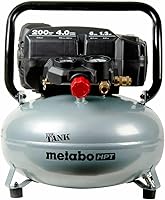
California Air Tools vs Metabo: Which Is Better? (October 2026)
Choose the California Air Tools 8010A for quieter garage work, the Metabo HPT EC914S for multiple nailers, or the Metabo HPT EC28M for compact quiet tasks. The right California Air Tools vs Metabo choice depends on your tools, work space, and how often you move the compressor.
On this page (8 sections)
- California Air Tools vs Metabo: which compressor fits your work?
- Which compressor is better for nail guns?
- Which compressor has the lower noise rating?
- How do tank size and portability compare?
- How should you set up and care for either compressor?
- Is either compressor a good choice for filling tires?
- What mistakes should you avoid when choosing?
- Which should you choose: California Air Tools or Metabo?
Choose the California Air Tools 8010A for quieter garage work, the Metabo HPT EC914S for higher airflow and multiple nailers, or the compact Metabo HPT EC28M for smaller quiet tasks. The California Air Tools vs Metabo choice comes down to the tools you run and the space where you work.
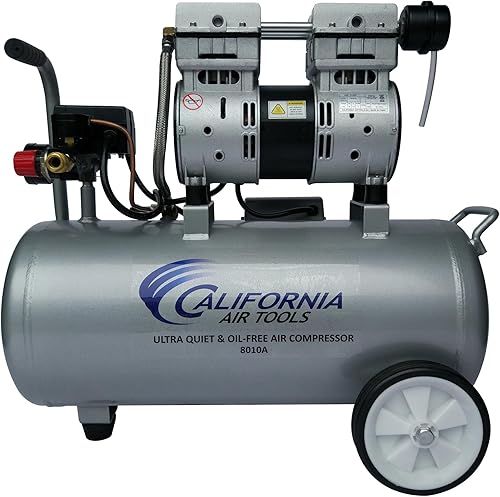
The 8010A pairs an 8 gallon tank with a 60 dBA rating and a wheel kit. The EC914S has a 6 gallon tank and 4 CFM at 90 PSI, while the EC28M is a 1 gallon option rated at 59 dB.

California Air Tools vs Metabo: which compressor fits your work?
Choose by matching the compressor to your tool's airflow needs and your tolerance for noise. The 8010A favors garage use where a lower stated noise level and a larger tank matter; the EC914S favors work that uses several nailers.
The 8010A's oil-free dual piston pump, wheels, and lower noise rating make it the more practical fit for many home garages. Its airflow is lower than the EC914S, so check the tool's CFM requirement before choosing it for air-hungry equipment.
The EC914S is a portable pancake compressor for framing, roofing, siding, finish, and brad nailers. Its stated airflow supports multiple nailers, making it the clear choice for a crew or a project where more than one nailer may be working.
The EC28M serves a different purpose. Its 1 gallon tank and 59 dB rating suit compact jobs where carrying a small compressor is more useful than storing a large air reserve.
| Product | Best for | Tank | Noise | Airflow | Our score |
|---|---|---|---|---|---|
| California Air Tools 8010A | quieter garage work | 8 gallons | 60 dBA | 2.20 CFM at 90 PSI | 9.2 |
| Metabo HPT EC914S 6-Gallon Pancake | framing crews | 6 gallons | 4 CFM at 90 PSI | 9.0 | |
| Metabo HPT EC28M Quiet 1-Gallon | small quiet jobs | 1 gallon | 59 dB | 8.1 |
California Air Tools vs Metabo for home garage use
The 8010A is the better fit when you want a wheeled compressor with a lower stated noise level. Its 8 gallon tank gives it more stored air than the 6 gallon EC914S, but it does not provide the EC914S's higher airflow.
That distinction matters when you choose tools. A larger tank can provide a bigger reserve before the motor needs to refill it, while CFM tells you how quickly the compressor can supply air during use.
If you use nailers or another air tool with a stated CFM requirement, compare that number at the tool's working pressure with the compressor's output. For a broader checklist covering workspace, tool needs, and capacity, see our guide to choosing an air compressor for home use.
Skip the 8010A if your main goal is running several nailers at once. Its lower airflow is a more important limitation for that job than its larger tank is an advantage.
Which compressor is better for nail guns?
The EC914S is the stronger choice for nail guns because it delivers 4 CFM at 90 PSI and is designed to run multiple nailers. It can run 2 framing nailers, 2 roofing nailers, 2 siding nailers, 3 finish nailers, or 5 brad nailers, according to Metabo HPT.
Those tool counts help identify the kind of work the EC914S targets, but your actual setup still depends on the nailers you own and how they are used. Check each tool's air requirements and use the manufacturer's instructions when connecting more than one tool.
The 8010A provides 2.20 CFM at 90 PSI. It may work for a lower air demand tool, but it is not the better choice when several nailers need a steady air supply.
The EC28M is not a substitute for the EC914S on demanding nailing work. Its small tank makes it easier to carry, but its airflow figure is not available here, so choose it only when the requirements of your specific tools are known and modest.
For trim projects, compare your tool requirements with our guide to air compressors for nail guns and trim work. If your work is occasional and you are considering a smaller tank, the 6 gallon compressor guide can help you judge whether that capacity is enough.
What should you check before connecting a nailer?
Check the tool's required pressure, airflow, and connection before attaching it. Set the regulator to the tool's specified pressure and use a compatible hose and fitting.
Start with one tool and confirm the compressor builds pressure and cycles as expected. If a tool repeatedly outruns the compressor or performance drops during use, stop and check the tool's requirements and hose connections before continuing.
Which compressor has the lower noise rating?
The EC28M has the lowest stated noise figure at 59 dB, followed by the 8010A at 60 dBA. The EC914S has a 73 dB rating, so it is the least suitable of these three when limiting compressor noise is a priority.
For a home garage, the 8010A offers a larger tank and wheels while keeping a lower stated noise level than the EC914S. The EC28M is quieter by its stated figure, but its 1 gallon tank limits how well it fits longer or more demanding jobs.
Noise at your work area also depends on placement and the room. Keep the compressor in a stable, suitable location, allow room around it as directed in its manual, and consider how close it will be to occupied rooms.
Don't choose the EC28M solely because its noise figure is lowest. If your tools need a larger supply of air, the small tank may cause more interruptions than its quiet operation can make up for.
How do tank size and portability compare?
The 8010A has the largest tank and wheels, while the EC914S has a compact pancake form. Pick the layout that fits your storage and the way you'll move the compressor.
The 8010A weighs 37.25 lb and includes a wheel kit. Its dimensions are 24 x 13 x 21.85 in, so measure the route to your work area and the space where you plan to store it.
The EC914S weighs 41 lb and measures 16 x 16 x 18.5 in. Its pancake design is a practical shape for job-site use, but you'll need to lift it rather than roll it on its included wheel kit.
The EC28M weighs 25.2 lb and measures 14 x 14 x 13.5 in. Its carry handle and steel roll cage suit someone who needs to move a small compressor by hand between nearby work areas.
Weight is only one part of portability. Check stairways, door widths, vehicle space, and storage shelves before buying, especially if the compressor will move between job sites.
For a broader look at common compressor shapes, see pancake vs hot dog compressors. If oil-free operation is part of your decision, our oil-free vs oil-lubricated compressor guide explains what to consider.
How should you set up and care for either compressor?
Set the compressor on a stable surface, connect a compatible hose, and follow the manual for power, pressure, and draining. A careful setup helps you avoid poor connections and keeps routine use predictable.
Before connecting a tool, inspect the hose and fittings for damage and make sure they match the compressor and tool. Route the hose so it won't be pinched, tripped over, or pulled across a sharp edge.
Set the tool pressure at the regulator according to its instructions. The maximum pressure printed for a compressor is not a target setting for every tool, and raising pressure does not replace matching the tool's CFM needs.
Oil-free pumps don't require adding pump oil, but that doesn't mean every part is maintenance-free. Check the manual for any care steps, inspect fittings and cords, and drain the tank as directed after use.
For steps and timing specific to tank care, use our guide to draining an air compressor tank. Keep the manual nearby for operating limits and safety instructions.
Is either compressor a good choice for filling tires?
Either tank compressor can serve occasional tire inflation with suitable inflation equipment, but neither is presented as a dedicated tire inflator. Choose one only if you also need a shop or job-site compressor.
You'll need a compatible hose and inflation fitting, and you should follow both the compressor instructions and the tire maker's guidance. Check tire pressure when the tires are cold and use the vehicle placard for the correct target.
A portable inflator is easier to keep in a car if tires are your main concern. Our guide to filling tires with an air compressor covers the basic process, while the best tire inflators for cars and garages compares options built for that task.
What mistakes should you avoid when choosing?
Don't compare tank size, maximum PSI, or noise as if any one measure tells the whole story. Start with the demands of your most common tool, then consider where and how you'll use the compressor.
A common mistake is buying the larger tank and assuming it will run a demanding tool better. The 8010A holds more air, but the EC914S provides more airflow at 90 PSI, which is the more useful measure for sustained tool work.
Another mistake is treating maximum PSI as a direct measure of capability for every job. Use the pressure your tool requires and compare the compressor's airflow at that pressure.
Don't ignore the physical setup. A wheeled compressor can be easier to move across a garage floor, while a compact pancake may fit a tighter storage space; stairs and vehicle loading can change which one feels practical.
Finally, don't choose the smallest compressor just because it is quiet and easy to carry. The EC28M's compact size works in its favor for short, modest jobs, but it is a poor match if you need a large air reserve or several tools running.
Which should you choose: California Air Tools or Metabo?
Choose the California Air Tools 8010A for a quieter garage setup, the Metabo HPT EC914S for higher airflow and multiple nailers, or the EC28M for compact, quiet tasks. In the California Air Tools vs Metabo decision, your tool's air needs should settle the choice before tank size or portability.
Pick the 8010A if you want wheels, an 8 gallon tank, and a lower stated noise level for home projects. Skip it if several nailers or another high airflow tool are central to your work.
Pick the EC914S if you need 4 CFM at 90 PSI and a compressor designed for multiple nailers. Skip it if lower noise is your first priority or if your work rarely calls for that much airflow.
Pick the EC28M if a lightweight, quiet compressor suits small tasks and easy carrying. Skip it for long, air-hungry jobs where its 1 gallon tank is a clear constraint.
For a closer look at the two larger choices, read our California Air Tools 8010A review and Metabo HPT EC914S review.
Frequently asked questions
Is the California Air Tools 8010A quieter than the Metabo HPT EC914S?
The 8010A has the lower stated noise figure, at 60 dBA compared with 73 dB for the EC914S. Choose it when compressor noise matters in a garage or shared work space, and place it according to the manual to help manage the sound.
Which compressor has more airflow?
The Metabo HPT EC914S provides 4 CFM at 90 PSI, compared with 2.20 CFM at 90 PSI for the California Air Tools 8010A. That makes the EC914S the stronger fit when your tools need more air at working pressure.
Is the 8010A or EC914S better for nail guns?
The EC914S is designed to run multiple framing, roofing, siding, finish, or brad nailers. Check the air needs of your specific tools and compare them with the compressor's airflow at the pressure you plan to use.
Does a larger tank mean a compressor has more airflow?
No. Tank size and airflow measure different things.
The 8010A has an 8 gallon tank, while the EC914S has 6 gallons, yet the EC914S has the higher stated airflow at 90 PSI.
Is there a quieter Metabo HPT option?
The Metabo HPT EC28M has a 59 dB noise rating and a 1 gallon tank. It can suit compact tasks where quiet operation and easy carrying matter, but its small tank makes it a poor match for sustained high air demand.