Oil-Free vs Oil Air Compressor: Which Is Better? (October 2026)
Choose oil-free for simpler upkeep and oil-lubricated for a pump that runs cooler and minimizes wear. Your tools, work area and comfort with routine checks should guide the choice.
On this page (7 sections)
Choose an oil-free compressor for simpler pump upkeep and an oil-lubricated compressor for a pump designed to run cooler and reduce wear. In an oil free vs oil air compressor comparison, match airflow and noise to your tools and workspace before deciding.
Oil-free pumps avoid pump oil checks and changes. Oil-lubricated pumps use oil to lubricate moving parts, so they need the maintenance set out in the manual.
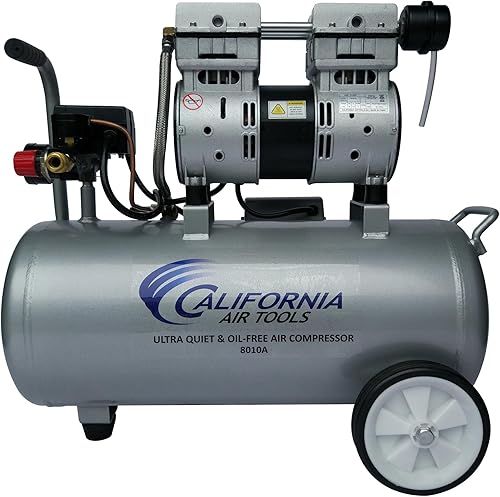
The California Air Tools 8010A is an oil-free example, while the Makita MAC2400 and MAC700 use oil-lubricated pumps. Their airflow, tank size and noise figures show why pump type is only one part of the choice.

Oil-free vs oil-lubricated air compressors: what is the difference?
The main difference is whether the pump uses oil for lubrication. Oil-free compressors simplify pump care, while oil-lubricated models require oil maintenance.
Oil-free doesn't mean maintenance-free. You still need to drain the tank as directed, keep the intake clear and follow the manual for checks and cleaning.
An oil-lubricated compressor needs the correct oil level and changes at the intervals its manual specifies. Oil helps lubricate the pump and manage heat and wear.
What does oil-free mean in an air compressor?
An oil-free compressor has a pump designed to operate without a supply of pump oil. That removes oil checks and changes from the pump-care routine.
The California Air Tools 8010A uses an oil-free dual piston pump. California Air Tools says the pump is designed for over 3,000 hours before wear, but that claim isn't a promise of service life under every duty cycle.
Oil-free construction may be useful if you move between jobs or want fewer pump-care steps. It doesn't tell you how much air the compressor can deliver, how loud it is or how often its tank needs draining.
What does oil-lubricated mean?
An oil-lubricated compressor uses oil to lubricate the pump. The Makita MAC2400 and MAC700 both use oil-lubricated cast iron pumps.
Makita describes the MAC2400 pump as running cooler and minimizing wear. That design still needs the correct oil and maintenance schedule, so check the manual before use.
If you have a pancake compressor and aren't sure which pump it has, our guide on whether pancake air compressors need oil explains what to check.
Which compressor type is easier to maintain?
Oil-free is simpler for pump maintenance because there is no pump oil to check or change. Both compressor types still need routine care.
Tank water collects as compressed air cools. Drain the tank according to the manual, and check the intake filter, hoses and fittings at the intervals the manufacturer recommends.
With an oil-lubricated pump, check the oil and change it as instructed. Use only the oil type and amount specified for that model.
For a practical care routine, see our guide on how to drain an air compressor tank. It covers a task that applies to both pump types.
Maintenance can also affect how well a compressor works. If the motor runs but pressure stays low, follow the steps in why an air compressor won't build pressure, and stop if the manual calls for qualified service.
How do airflow and tank size compare?
The MAC2400 delivers the most airflow of these 3 models at 90 PSI, while the 8010A has the largest tank. Compare both figures with the tool's needs.
The 8010A provides 2.20 CFM at 90 PSI and has an 8 gallon tank. The MAC700 provides 3.3 CFM at 90 PSI from a 2.6 gallon tank, and the MAC2400 provides 4.2 CFM at 90 PSI from a 4.2 gallon tank.
Tank capacity is stored air, not a direct measure of continuous output. A larger tank can provide a reserve, but the pump's airflow and recovery matter when a tool runs for more than a short burst.
Check your tool's CFM requirement at its working pressure. If you're sizing a compressor for a particular task, our guide on how to choose an air compressor for home use can help you compare tool demand, airflow and tank capacity.
Is an oil-free compressor good for air tools?
An oil-free pump can run air tools if its airflow and pressure meet their requirements. Pump type alone doesn't determine whether a compressor can keep up.
The 8010A's 2.20 CFM at 90 PSI may suit tools with modest airflow needs. For tools with higher demand or longer run times, the MAC700's 3.3 CFM or the MAC2400's 4.2 CFM may be a closer fit.
Nailers often use short bursts, while sanding and grinding can draw air continuously. Match the compressor to the tool's stated demand and account for any duty-cycle guidance in the manual.
Which type is quieter?
The 8010A has the lowest stated noise level among these 3 compressors at 60 dBA. The MAC2400 is rated at 79 dB, and the MAC700 at 80 dB.
Those numbers are useful for comparison, but your distance from the compressor, room surfaces and how long it runs also affect how intrusive it feels. A quiet rating doesn't remove the need to protect your hearing around loud tools.
Choose the 8010A when compressor noise is a major concern for indoor work. If your current compressor is loud, our guide to making an air compressor quieter covers practical steps that don't change its pump type.
Which is easier to move around a garage?
The 8010A weighs about 37.3 lb and includes a wheel kit. The MAC700 weighs 52 lb, while the MAC2400 weighs 77 lb.
The 8010A's oil-free pump may also be easier to place on uneven terrain, as California Air Tools describes it for varied working conditions. Still, use the compressor on a stable surface and follow its manual.
The oil-lubricated Makitas trade more weight for their listed airflow and cast iron pumps. If you regularly move a compressor between a home and a work area, think about its route, stairs and how you'll secure it for transport.
Do oil-free compressors provide cleaner air?
Oil-free means the pump doesn't use oil for lubrication, but it doesn't guarantee air that is free of moisture or other contaminants. The air path, tank and maintenance all matter.
California Air Tools describes the 8010A as providing cleaner air for tool operation. For applications that need a certain air quality, check the tool or process requirements and use suitable filtration.
Water can still collect inside the tank and pass into the hose. Drain the tank as directed and use a filter or dryer if your tool or work material requires it.
Which compressor should you choose?
Choose an oil-free compressor for fewer pump-maintenance steps and an oil-lubricated model when you need its airflow and accept oil care. Then compare noise, weight and tank capacity against your work.
Pick the California Air Tools 8010A for an oil-free pump, 60 dBA noise rating and 8 gallon tank. Its 2.20 CFM at 90 PSI is the lowest airflow of these 3 models.
Pick the Makita MAC2400 if your tools need up to 4.2 CFM at 90 PSI and you can maintain an oil-lubricated pump. Choose the Makita MAC700 for 3.3 CFM at 90 PSI and a smaller 2.6 gallon tank.
For another pump-type comparison, see California Air Tools 8010A vs Metabo HPT EC914S. The right compressor is the one that meets your tool demand and fits your routine for noise, movement and care.
Frequently asked questions
Is an oil-free air compressor better than an oil-lubricated one?
An oil-free compressor is easier to maintain because you don't change pump oil, while an oil-lubricated pump uses oil to help reduce wear. Neither type is better for every job.
Match airflow and pressure to your tools, then consider noise, transport and upkeep.
Do oil-free air compressors last as long?
Lifespan depends on the compressor's design, use and care. California Air Tools says the 8010A's dual piston pump is built to last over 3,000 hours before wear.
This is a manufacturer claim, not a promise of service life for every user or job.
Does an oil-lubricated compressor need regular maintenance?
Yes. Follow the manual for checking and changing pump oil, draining tank moisture and inspecting the compressor.
Oil helps lubricate the pump, but it doesn't replace general care.
Our guide to whether pancake compressors need oil explains how pump type affects upkeep.
Can an oil-free compressor be used indoors?
Yes, if its noise level, airflow and electrical needs suit the room and job. The California Air Tools 8010A is rated at 60 dBA and described for indoor and noise-sensitive environments.
Follow the manual's guidance for use and ventilation.
Which type is better for air tools?
Choose by each tool's required CFM and PSI, not by lubrication type alone. The 8010A provides 2.20 CFM at 90 PSI, the Makita MAC700 provides 3.3 CFM, and the MAC2400 provides 4.2 CFM.
Check the tool's requirements and allow for any extra airflow it needs.